The doctrine of Papal Infallibility is a commonly misunderstood concept in both Catholic theology and Catholic history. Some individuals uphold an ultramontane position which they use to elevate the council to turn the pope into the desired and perfect prince of the Church. This position [ultramontanism] seeks to elevate the pope as a man who is above all things, making him a Supreme Judge and Legislator among men, in other words, a perfect and ideal bishop. Other people hold a neo-conciliarist position, which minimizes or outright denies the infallibility of the pope, in effect removing part of what makes [according to Rome] the Petrine ministry unique. Although an important dogma promulgated by the Western Church, it must be understood in its historical and hermeneutic context.
Papal Supremacy and the Secular World
Not much has changed from the 19th century to today’s day. Just like today, the Church was in crisis in the period leading up to Vatican I. Secular governments of all stripes were undermining Catholic Institutions by imposing new laws and regulations that either reduced the role of the Church in society or replace it with the secular government. This was emphasized when the Italian nationalists took the city of Rome by force dissolving the Papal States in 1870 (which forced the Council to end abruptly). Another example of secular nationalism came from Otto von Bismarck’s Kulturkampf who saw to conform to the will of the state by not just controlling Catholic schools and seminaries, but also appointing pro-government clergy to the position of Bishops.
Things were so bad on this matter that when word got out that the Holy Father was convoking a council to proclaim the dogma of Papal Infallibility the secular world became concerned with the result that such proclamation would have. Usually, one would think that the councils of Rome would regard principally just the communion of the Catholic Church, but even after the long fall of the Roman empire, and the weakening of Christendom that was not the case. Some leaders like the Bavarian Prime Minister Hohenlohe called other leaders to aid him in preventing the council from even taking place. Such concerns echoed across the world with many seeing the pope as usurping the temporal powers of the states.
The laity was well trying to underwhelm the spiritual and temporal power of the Catholic Church. This began to be seen when liberal Catholics got ahold of the news regarding the council. Once an article containing the news about the Council proclaiming Papal infallibility was published by the Jesuit auspice-run periodical Civilta Cattolica, the laity on both sides rose in conflict. The conflicts were not always theological, but also engulfed violent conflict. The Jesuit side published the leaked information to gauge the prevalent opinion of ultramontanism. This led to violent conflicts in France in which different bishops took different sides. In Germany, the conflict, and influential views against ultramontanism even gave birth to new ideas on the reformation of the clergy and the structure of the Church. The Italian freethinkers even attempted on persuading the neo-conciliar bishops to convoke a rival synod in the city of Naples. Even given that the council had enemies in the highest office of governments from Eastern Europe to North America, the council was able to meet thanks to the protection of the French troops who were the protectors of the Papal States.
Vatican I
Regarding the promulgation of what is commonly stated as ‘ex-cathedra’, we must first review the events which led to it. In the introduction of the Decree of the council, we find the first reference to the Church’s resolution against the heresies which come into fruit by the doctrines of rationalism and naturalism which seeks to promote the destruction of the very foundation of human society through the promotion of sins against nature. The promulgation of Papal Infallibility is promulgated in Chapter 1-4 of Session 4. The main part states:
“Therefore, faithfully adhering to the tradition received from the beginning of the Christian faith to the glory of God our Savior, for the exaltation of the catholic religion and the salvation of the Christian people, with the approval of the sacred council, we teach and define as a divinely revealed dogma that when the Roman pontiff speaks EX CATHEDRA, that is, when, in the exercise of his office as shepherd and teacher of all Christians, in virtue of his supreme apostolic authority, he defines a doctrine concerning faith or morals to be held by the whole church, he possesses, by the divine assistance promised to him in blessed Peter, that infallibility which the divine Redeemer willed his church to enjoy in defining doctrine concerning faith or morals. Therefore, such definitions of the Roman pontiff are of themselves, and not by the consent of the church, irreformable. So then, should anyone, which God forbid, have the temerity to reject this definition of ours: let him be anathema.”
The meaning of such a canon can be variously misunderstood. It is important, then, to examine the concerns which followed the council, points on which the faithful asked their bishops for clarification. While newer documents have appeared, I strongly believe that a historical analysis and critique of the promulgation of the “new” Papal belief will aid the Church.
It is important to note that the Roman Pontiff can only speak ex-cathedra, namely when he exercises the authority of pastor and teacher of all Christians. He can do so from the virtue of his supreme apostolic authority only when speaking on a matter of faith and morals. Furthermore, rather than looking at the papacy as the head of the Church, it emphasizes the pope as the mouthpiece of the Body of Christ which embodies the infallibility and diversity (as the Body has multiple body parts with different roles) of the Church.
Concerns Regarding Ecumenism
The view of a very small minority of Catholics is then and it is now that this dogma would hinder the dialogue among Orthodox and Catholic Churches. Due to this concern, two key bishops brought up this point early on. The French prelates, Archbishop Darboy of Paris and Bishop Dupanloup of Orleans both raised concern. In fact, these concerns remained in the hearts of many; this makes it all the more necessary to understand Vatican I in the light of the Council Fathers’ intentions.
The Concern of these bishops was not without ground. Pope Pius IX had previously stated that “He was tradition”, thus remarking what many worried about, the Pope violating the true sentiment of unity for one of the complete ruling. Such was the reason that Patriarch Gregory II Youssef opposed the council. The Melkite Patriarch gave two discourses two the Council in which he emphasized the need not to develop the Papal position beyond the decisions of Florence. After seeing that his voice was been ignored and diminished by the Western clergy, the good Patriarch left the Council with his bishops without signing the documents. Pope Pius IX dispatched an emissary of the Roman Curia then after the Council to obtain the signature of the Melkite delegation. Patriarch Gregory did subscribe to it, but only after he added the qualifying clause used at Florence; “Except the rights and privileges of Eastern Patriarchs”. This emphasis which was agreed upon in Florence pointed out that Rome does not have immediate jurisdiction over the Eastern territories in all cases.
The Mouthpiece of the Church
The Papacy as the Mouthpiece of the Church follows the formula DEFINIMUS, which is invoked the unity of the church, to say, “we define”. This is seen in the book published by Bishop Fessler in 1875, titled “The True and The False Infallibility of the Popes”. In his book, the good Bishop expands on what is considered the True and Authentic Character of the new dogma. First, the pope must express the intention to declare a particular doctrine on faith and morals as an integral part of the Catholic faith which is necessary for salvation. He must then publish it and give a formal definition of the matter. It is then that the pope’s infallibility is as a teacher of truth, necessary for unity and the salvation of the faithful. He is not a supreme priest or bishop, much less a supreme legislator in matters of discipline, nor a supreme judge. The pope then cannot speak on matters which are contrary to the magisterium of the Church, nor extend his ecclesiastical jurisdiction in other respected matters of the Church. In a clear-cut way, Bishop Fessler stated “The pope cannot according to his own will and fancy extend his infallible definition to matters relating to the jus publicum, to which divine revelation does not extend.” Bishop Fessler’s work was not a mere opinion piece. Pope Pius IX himself approved the work of Bishop Fessler and ordered translated into Italian.
Bishop Fessler’s was not the only approved work regarding Papal Infallibility. The Swiss bishops published a statement that was lauded by its orthodoxy by Pius IX. The statement reads:
“It is no way depends upon the caprice of the pope or upon his good pleasure to make this or that doctrine the object of a dogmatic definition. He is bound by and limited to the divine revelation, and to the truths which that revelation contains; he is bound and limited by the divine law and by the constitution of the Church; which affirms that alongside the ecclesiastical hierarchy there is the power of temporal magistrates, invested in their domain with full sovereignty and to whom we owe in conscience obedience and respect in all things morally permitted, and which belong to the domain of civil society.”
A few key points to summarize here are: The pope’s power is limited to infallibly define what is already agreed to by the Church and what has been accepted as part of the Divine revelation. The pope cannot contradict the Church, for his infallible character flows from the infallible character of the Church (thus, he is the mouthpiece). This position as the mouthpiece allows the pope to be the guide and leader of the bishops, as well as the final court of appeals. Papal powers which alone the successor of Peter enjoys due to the apostolic character of the see of Rome. The papacy thus affirms the rights of bishops and their jurisdictions as well.
Orthodoxy, Old Catholics, and Catholicism
The Orthodox were not the only ones that reacted against the promulgation of such decrees but were joined by the largest schism since the reformation, the communion of “Old Catholics”. Both saw the doctrine as elevating one man above the other bishops and violating the rights of fellow bishops. The groups of Roman Catholics that denied the promulgation of Vatican I then joined the Old Catholics of Utrecht who were financed by Otto von Bismarck. However, a theological analysis of the understanding of the dogma following Vatican I allows us to see its patristic inclusion following the Council. Fr. Vincent McNabb O.P. (to whom Gilbert K. Chesterton even referred to as one of the few great men he ever met) wrote a treatise regarding Infallibility on which he argues that the practice of ex-cathedra is the culmination of the ancient referendum. The referendum was used by the Patriarchs to communicate with the bishops’ decisions on the theological matter when a council could not meet. So it is that the promulgation of the dogma of ex-cathedra infallibility is, for Fr McNabb O.P., in reality, a reflection of a universal referendum used in times of need. This conveys was used ultimately by Pius IX before his declaration on the Immaculate Conception.
In his treatise, Fr Vincent McNabb O.P., states:
“It should be noted that infallibility is primarily given for the Church, and in some sense resides primarily in the Church. Neither the pope nor the General Councils are ends in themselves: they look towards the Church… So may it be said in a very true sense that the gift of infallibility resides primarily in the Church rather than in the popes or General Councils… Though popes and General Councils may be looked upon as the proximate principles or organs of the Church’s infallibility, yet it is true to say that in a certain sense infallibility resides primarily not so much in the popes or the General Councils as in the Church. When then, it is recognized that Faith demands objective infallibility and that conciliar and papal infallibility, though not subordinate to the infallibility of the Church, are yet referred on to it, matters are seen in their true light.”
It is then that even when the Pope should proclaim a matter of faith or morals ex-cathedra, he can do so only after having examined the mind of the Church in this matter. The pope can never act by himself without the consent of his fellow bishops for whom he speaks as a representative of the whole Catholic Church. While Pius IX might have wished to elevate the papacy beyond its historical position, the popes following him such as Leo XIII saw to interpret the proclamation within the light of patristics.
The Other Statements
Besides the Immaculate Conception and the Assumption of Mary, ten statements have been declared infallible via the Papacy rather than a General Council, according to Bishop Fessler. While no actual doctrinal publication exists on this matter, these have been speculated by theologians since Vatican I. Nevertheless, such statements are important to look at examining the essence of the dogma and put to rest any doubts in the minds of people. Some of these statements are Leo I’s letter to the Patriarch Flavian before the Council of Chalcedon, the Letter of Pope Agatho regarding the two wills of Christ, which was received by the Third Council of Constantinople, Benedictus Deus by Pope Benedict XII, Cum Occasioned by Pope Innocent X, Auctorem Fidei by Pope Pius VI, etc. That these methods must indicate a presentation by referendum or to a council for them to be considered ex-cathedra, shows the pope serves as the mouthpiece of the Church. Even Bulls and Encyclicals while accepted as truth, do not partake of this character of infallibility since they are not expressed in a unity of voice with the bishops.
Conclusion
Papal Infallibility often serves as the ghost of Vatican I. Unfortunately, due to the lack of catechesis in the present-day Catholic Church, some mistake this beautiful teaching of unity and love as a radical doctrine making the pope the supreme King and Judge of the Catholic Church. Yet contrary to the evidence presented and the statements approved even by Pope Pius IX, the teaching serves to uphold the bishops’ rights, promote union, and limit the actual powers and rights of the Pope of Rome, the Prince of the Apostles. This idea persisted until Vatican II which, contrary to the Vatican I, the Orthodox and Protestant Churches did attend (though both Councils sent invitations for them to attend as non-participants). Vatican II reinforces the declaration of Florence and the rights of bishops in the dogmatic Constitution of Lumen Gentium, by which it declares the Second Council a continuation of Vatican I and acknowledges the pope as the voice of the union of Bishops.
Translated by Sergio Garibay: (From La Maison-Die, No 11, published in 1957)
Many authors, dealing with liturgical questions, seem to consider the use of a dead and universal language in ceremonies as a traditional requirement in the Church. This is to ignore history completely: the discipline, in this matter, has been very variable according to time and place, and it has been established less on the basis of doctrinal principles than on very contingent facts. Even a quick glimpse of this evolution1 will make it possible to realize clearly the relative character of the prescriptions concerning the liturgical language and the possibilities open to the Church on the day when, in her wisdom, she thought it necessary to reconsider these prescriptions.
Chapter I
Antiquity (From 1st to 6th centuries)
The nascent Church could hesitate, in the celebration of her liturgy, between two linguistic expressions. There was, in fact, the example of the Jews of Palestine, who used Hebrew, a dead language, for temple worship, the paschal ritual, the reading of the Bible (not to mention the practice of Roman paganism, whose formulas rituals are written in old italics were often unintelligible even for letters). But at the same time, there was another use, that of the synagogue and the Hellenizing Jews, which consisted in using, for worship, a living language, written language, or spoken language (common Greek, Aramaic, etc.).
Having to choose between celebration in a dead language and celebration in a living language, the Church has everywhere opted for the living language. The one that appears to be the most universal is Greek. We see its use from the first century in Greece proper (Epistle to the Corinthians), in Asia (Epistles of Saint Paul, Apocalypse), in Syria-Palestine, in Rome (Epistles to the Romans, Gospels of Saint Mark; Saint Clement). In Rome, in particular, Greek dominated to the exclusion of Latin, until the middle of the third century, as one can see by the inscriptions of the catacombs, the works of Saint Justin, and those of Saint Hippolytus2. That we do not imagine that there is there the desire to have a unique liturgical language: where Greek is used, it is because, in fact, the greater part of the community is Greek-speaking (this is the case with Rome in particular, and this is now clearly emphasized value by all historians). But in the centers where Greek is not spoken, other languages are put at the service of the liturgy.
Thus, Latin is, from the start, the liturgical language of Africa (Carthage): Latin, and not Punic, which is in the process of disappearing completely, to the point that Saint Augustine’s listeners do not understand it, this bishop is obliged to translate a local proverb into Latin3. Some communities in Syria-Palestine used Aramaic, as evidenced by the existence in this language of a text from Saint Matthew. The Syriac of Edessa is used long before Saint Ephrem and the Pešitta; without entering into the discussion of the dates of the old versions of the Bible, it is certain that the Diatessaron of Tatian was from its composition, around 172, the object of a translation into Syriac.
In Egypt, Greek dominates in Alexandria and Fayum, but as Christianity enters the interior of the country, the liturgy uses other languages. Remarkable fact: the churches did not rule out any of the Coptic dialects. However, these dialects were officially ignored by the administration; some were not yet fixed in writing. These difficulties do not seem to have stopped the missionaries of Upper Egypt since from at least 275, the Bible is read in Coptic in churches4: there is a Sahidic version, an Akhminic version, and a Fayumic version. The popular character of the Egyptian liturgy, therefore, appears in a striking way; there were even translators in the bilingual communities, such as the martyr Procopius, who interpreted the liturgy in Scythian.
The Churches do not feel any reluctance to change the liturgical language when the need arises. The most typical case in this regard is that of Rome: during the third century, Latin competes with Greek there, which it definitively supplants around 375; later, in the 7th century, the presence of an imposing Byzantine colony will cause a partial return to the language of Saint Paul and Saint Clement (bilingual readings at mass and at the vigil; formulas, bilingual at baptism, etc.). Similarly in Egypt, the respective domains of Greek and local dialects have fairly shifting borders according to political vicissitudes. Finally, in some countries, evangelized first in Greek or in Syriac, a liturgy is subsequently formed in the national language, such as Georgia and Armenia. In Georgia, the Kartvelian must have been adopted between the 5th and the 6th century, whereas evangelization had taken place in the 4th century; in Armenia, a country Christianized from the end of the 3rd century (Saint Gregory the Illuminator), the national language was introduced into worship by the patriarch Isaac the Great, during the first quarter of the 5th century.
Thus, in various countries, thanks to the liturgical spirit of the missionaries, the local languages are fixed and rise to the literary level. But all these countries are located east of Rome, and all these languages are languages of the East. In Gaul, Spain, and Ireland, the liturgy is celebrated in Latin. With one exception (the gothic church of the bishop Ulfila), all the barbarian peoples who invaded the West in the V-VI century also adopted Latin. This is because the Latin found, in the countries of Occident, a power of penetration contrary to the penetration that the Greek and the Syriac tongues did not know in the East: of the local languages of the West5, as much of the natives as of the invaders, it remained almost nothing. This difference will lead to a great disciplinary divergence on the question of the liturgical language between the Churches of the East and those of the West, as we shall see shortly. For the moment, let us just note with Origen the great diversity of liturgical languages in the Catholicity of the imperial era; far from being astonished by this, the priest of Alexandria found it a subject of edification: The Greeks use Greek words, the Romans Latin words, and all the other peoples pray and praise God each in his own language. God, being the master of all languages, hears those who pray to him in so many different languages, as if they were praying in one language; for he is not like men, who know one language, barbarian or Greek, ignore the others and do not bother about those who speak a language different from their own.6
Chapter II
Missionary Methods from the Orient to the Occident (7th to 10th centuries)
The Syrians did not have a missionary expansion. On the contrary, the Egyptians evangelized Ethiopia, the Nestorians brought Christ to India and to China, and the Byzantines founded the Church among the various Slavic peoples. The Nestorians have, in their missions, preserved Syriac as a liturgical language in all their missions, without any explanation for this principle. Their rigor only weakened with regard to the readings and hymns, which were translated into Sogdian, Hunnic, Mongolian, and Chinese7.
On the other hand, Egyptians and Byzantines translated the liturgy and the Bible into the local language everywhere. At a date difficult to specify (5th-7th centuries?), Gheez became the liturgical language of the Ethiopian Church, a subsidiary of that of Alexandria. As for the Greeks, they did not hesitate to translate their books successively into Pravo-Slavonic, Arabic (10th century)8, and later Romanian (17th century). Faithful to their tradition the Byzantine missionaries of the modern era used in the Baltic provinces, Estonian, Latvian, German, Alaska, and the surrounding territories, Eskimo and Indian dialects. In China and Japan, Chinese and Japanese; in North America, English and French, etc. We can see how true to itself this method is.
On the contrary, it would be a profound revolution in the missionary practices of the Western Church if the liturgy were celebrated by her in a language other than Latin. For the evangelization carried out by the Westerners in the period before the 16th century almost never posed the problem of a translation of the liturgy: even the catechesis and the preaching took place in Latin. The Angles, evangelized by Saint Augustine, had known Latin civilization in Roman Germany, and found on English soil very important remains of Latin culture; their language moreover contains many Latin words and will not be written before the 8th century. It was also in Latin that St. Boniface introduced the liturgy into non-imperial Germany and St. Ansgar into the Scandinavian countries.
However, there is a somewhat confusing area at the borders of the East and the West. Liturgical obedience overlaps, and so do missionary rights: Greek islands are scattered in Italy and as far as Rome. It is the Roman liturgy, which is implanted on the Dalmatian side, but according to the principle of the Byzantines, it is translated there is a dialect (Glagolitic missal, IX° century)9.
The agreement was not always so peaceful, since a serious conflict between the two usages broke out over the Moravian missions during the pontificate of John VIII. Moravia was simultaneously evangelized by Germans, who, following the Western custom, celebrated the liturgy in Latin and preach in Latin10, and by missionaries from Byzantium, Constantine from Byzantium, Cyril, and Methodius. The latter, faithful to the Eastern tradition, immediately undertook a translation of the Bible and the liturgy and for that purpose created an alphabet allowing the transcription in Slavonic. The rivalry of the Germanic apostles brings before the apostolic seat the question of the orthodoxy of the Byzantines, and of the legitimacy of their translations. It seems that the following objection of principle was made to these translations: the inscription of the Savior’s cross was in Hebrew, Greek, and Latin, so these three languages alone are allowed to praise the Lord. Methodius had no difficulty in demonstrating to Pope John VIII the traditional inconsistency of such a principle. He obtained satisfaction on all the line by a letter whose considerations are particularly important11:Litteras denique Sclavonicas, a Constantino quondam philosopho repertas, quibus Deo laudes debite resonent, jure laudamus, et in eadem lingua Christi Domini praeconia et opera ut enarrentur, jubemus. Neque enim tribus tantum, sed omnibus linguis Dominum laudare auctoritate sacra monemur, quae praecipit dicens : laudate Dominum omnes gente et collaudate eum omnes populi. Et apostoli repleti Spiritu Sancto locuti sunt omnibus linguis magnalia Dei. Hincet Paulus caelestis quoque tuba insonat, monens : omnis lingua confiteatur quia Dominus noster Jesus Christus in gloria est Dei Patris. De quibus etiam linguis in prima ad Corinthios epistola satis et manifeste nos admonet quatenus linguis loquentes, ecclesiam Dei aedificemus (I Cor., XIV 2-6). Nec sane fidei vel doctrinae aliquid obstat sive missas in eadem Sclavonica lingua canere, sive sacrum evangelium vel lectiones divinas Novi et Veteris Testamenti bene translatas et interpretatas legere aut alia horarum officia omnia psallere, quoniam qui fecit tres linguas principales, Hebraeam scilicet, Graecam et Latinam, ipse creavit et alias omnes ad laudem et gloriam suam.
Thus, the Pope officially consecrated the principle of the Orientals in spite of the opposition of the Westerners; the objections drawn by the latter from a pseudo-scriptural argument were reduced to nothing. It is interesting to note that these same objections will be formulated again seven centuries later, as we shall see subsequently.
Certainly, Pope Stephen V reversed the decision of his predecessor John VIII12, but it should be noted that he did not appeal to any theological considerations; he based himself only on facts, the falsity of which John VIII had moreover expressly declared in a letter to Saint Methodius13. Stephen was thus played by the cabal of the German missionaries, but this time St. Methodius was dead and could no longer defend his cause before the apostolic see:Divina autem officia et sacra mysteria ac missarum solemnia, quae idem Methodius Sclavorum lingua celebrare praesumpsit, quod ne ulterius faceret, supra sacratissimum b. Petri corpus juramento firmaverat, sui perjurii reatum perhorrescentes nullo modo deinceps a quolibet praesumatur… The pope only concedes (proof that this was not common in the Latin liturgy) that the explanation of the epistle and the gospel is done in Slavonic:Excepto quod, ad simplicis populi et non intelligentis aedificationem attinet, si evangeliis vel apostoli expositio ab eruditis eadem lingua annuncietur, et largimus et exhortamur, et ut frequentissime fiat monemus, ut omnis lingua laudet Deum et confiteatur ei14
Chapter III
The Middle Ages (10th to 15th centuries)
Celebration of the Tridentine Latin Mass
In the Middle Ages, it does not seem that the hierarchy asked itself the question of the liturgical language, although Saint Gregory VII renewed, for Bohemia, the prohibition of Slavonic already formulated by Stephen V15. A decretal of Innocent III at the Lateran Council (c. 14, 1. I, tit. 30) refers to the presence, in certain Latin dioceses, of faithful of the Eastern rites.
However, insensitively, the language spoken in the various countries of Europe separates more and more from Latin. The Romance languages and the Germanic languages even begin to have abundant literature (poetry, tales, novels, fabliaux, lieds). Certainly, Latin remains the official language of treaties, notarial acts, courts, teachers, and books, of all serious life in short. In France and in Italy (in Spain too, no doubt), its pronunciation makes it very close to the vulgar language, and therefore intelligible (cf. Pater noster, pronounced patenostre or patenôtre in France). However, in the peripheral regions mainly (England, Bohemia), one complains of not understanding it; in France, the vulgar language is mixed with Latin in the liturgical chant (stuffed pieces, etc.). This evolution was so insensitive that it never concerned the Church, nor the States, which continued to use Latin as an official language, in the same way as the Church. Thus, Christianity is a profound reality, and the unity of the language cements its homogeneity. The Eastern schism of the eleventh century, in spite of the crusades and the councils of union, made the Church more tightly bound to the destiny of the “Romanità”.
Voices have been raised to ask for the liturgy in the vernacular, and perhaps initiatives have been taken in this direction. But these attempts at liturgical reform were premature: they were judged, with good reason, as taking away from the holy things their dignity, by displaying them in the language of the stage and the nightclub. Besides, they came from people who had fallen into heresy and who had disturbed, by their revolt, the peace of the Church: the Albigensians, Wicleff, Jean Huss.
Chapter IV
The 16th Century
In the 16th century, Latin remained the language of study and science, and thanks to the humanists, it was even revived among educated people who spoke and wrote it. But it is necessary to agree that it is not anymore that an elite who understands it from now on; one can even say that humanism is responsible for a great part of the decline of the Latin grammar of Cicero and by adopting a new pronunciation (wrongly called French), one has increased in great proportions the differences – which opposed it to the modern languages – have been increased into modern languages, more and more differentiated and evolved, and stabilized. Christianity no longer exists, and the modern states no longer feel united by a common ideal; the world of moreover has suddenly widened as well in the east as in the west, upsetting the conceptions of medieval society.
This complete change in the situation of Latin was noted by François I, who, in 1536, in an edict dated Villers-Cotterets, decided that official acts would henceforth be written in French. Whereas it was the language par excellence, that of all serious life, of all that is solemn and official, Latin is henceforth became only the language of the Church, the University, and the scholars.
At that time, the Protestants had included in their revolutionary agenda the adoption of the vernacular language in the liturgy. A question of tactics, one might say, the heresy wants to rely on the people: in passing, it is rather painful to note that the Church has too often left to the heretics the monopoly of the frankly popular methods; the boldness of Saint Ambrose fighting against the Arians with their own method by introducing popular hymns into the celebration of the services has not been sufficiently imitated, and painful ruins are perhaps attributable to our timidity. Yet among the Protestants, the adoption of the vulgar language is more than a matter of the mass and the sacraments, having in their eyes no value ex opere operato, having only the efficacy of preaching, become totally useless if this preaching is not heard by the faithful.
The Liturgical Language in the Council of Trent
The Council of Trent, therefore, had to address, in its session on the Mass (August-September 1662), the question of the vulgar language in the liturgy. Among the articles extracted from the works of the reformers and submitted for discussion, the ninth is thus conceived: “An missa nonnisi in lingua vulgari, quam omnes intelligant, celebrari debeat.” It must be said that the Assembly was faced with more serious difficulties, of a doctrinal nature, which caused this one to be relegated to the background; hardly three minor theologians and some theologians and a few Fathers expressed their feelings, and always in a vague and brief. Here, however, are the indications from this debate.
1) Almost everyone agreed that the principle of the Mass in the vernacular should not be condemned: Ferrante and several bishops (Bracaren, Calamonen, Veglen) insisted on this point. De Santis, a theologian from Salamanca, even stated that the pope could decide on a change of discipline on this point if he judged it expedient16. The definitive text of chapter VIII takes account exactly of these reservations: “Non tamen expedire visum est Patribus ut lingna vulgari missa passim celebretur. ” The argument of the three languages presented by the same De Santis does not seem to have made an impact on anyone to be convinced.
2) However, the Protestant demand was not considered, and here are the reasons why the translation of the liturgy was considered inappropriate:a) «Ne margaritae dentur porcis, ne vulgo arcana Dei publicentur et ludibrio habeantur17.»; «neque videtur esse dubitandum quin, si missae vulgaricujusque gentis idiomate peragerentur, divina mysteria minori reverentia colerentur18» This argument dates back to Gregory VII « Ne vilescerent et subjacerent despectui19. » Today, we are a bit surprised by this. To understand this, we must remember what I noted above, that throughout the Middle Ages, Latin was the language of “serious” life and of all things noble and official. Benedict XIV, still in the XVIII century, wrote in his De sacrificio-missae, 2, 2, 5: «Cum tot sint vulgares linguae risu plane dignae et prorsus contemnendae. » We must not lose sight also of the fact that those times, known as times of great faith, had a familiarity with holy things that bordered on irreverence:Southern Italy could, even before the present war, give us some idea of this. Finally, the clergy itself was very poorly educated and lacking all dignity, was too much involved in the most trivial popular life.
b) « Esset etiam magnopere periculosum ne varii in multis translationibus errores nascerentur20.»
3) These reasons did not seem satisfactory to several Fathers21. They do not appear in the definitive text. Moreover, the text of 1 Cor. XIV, 16, came up several times in the discussion, and each time it was difficult to avoid it. If it is quoted by Justinian22, Cesare Ferrante declares peremptorily: Justinianum loqui de more greco23; as for Francisco de Santis, here is how he manages it: et ad 1 Cor. et ad 1 Cor. XIV, 16, quod opponunt haeretici, quod necesse est ut adstantes in ecclesia audiant quae dicuntur, etc., respondit Paulum intelligere de praedicante verbum Dei, vel quia eo tempore is mos erat, cum omnes essent tanquam religiosi et pii neque erat periculum irreverentiae, ut esset nunc, quando caritas refriguit24. -On the other hand, everyone agreed that at least some parts of the Mass were intended for the instruction of the faithful and should be understood by them: etsi Missa magnam contineat populi fidelis eruditionem, says the definitive redaction of chapter VIII25.
4) To compensate in part for the disadvantages of the Latin liturgy, the Council asks those in charge of souls to ensure the explanation of the Holy Mysteries and the readings:Ne oves Christi esuriant, neve parvuli panem petant et non sit qui frangat eis, manda Sancta Synodus pastoribus singulis curam animarum gerentibus, ut frequenter inter missarum celebrationem vel per se vel per alios ex his quae in missa leguntur aliquid exponant, atque inter cetera sanctissimi hujus sacrificii mysterium aliquod declarent, diebus praesertim dominicis et festis26. This text, which is much broader than the original draft, does not limit these explanations to the epistle and the gospel; nor does it specify that they must necessarily be given during the homily. In practice, however, these liberties and this advice are rarely taken advantage of.
Chapter V
The Language of the Liturgy After the Council of Trent
The attacks against the Council of Trent were not lacking in the camp of the Protestants; the most violent came from an Italian apostate, Paolo Sarpi (Pietro Soave). Among other grievances, the innovators reproached the Council of Trent for its attitude towards the vulgar language in the liturgy. The controversies and Catholic theologians were thus led to periodically take up the problem again, but now with an apologetic concern: for them, it was a question of justifying the decisions of the Council, of developing the reasons likely to show their validity. Hence the tendency to transpose onto the level of principles a discipline which the Fathers of Trent had based solely on expediency; this tendency can be seen in St. Bellarmine, and again, in the eighteenth century, in Benedict XIV 27.
The official decisions of the Church were influenced by this stiffening of the controversy. In 1699, the Holy See condemned Quesnel’s proposal no. 86:Eripere simplici populo hoc solatium jungendi vocem suam voci totius ecclesiae est usus contrarius praxi apostolicae et intentioni Dei28. It is not possible to determine exactly which “note” this proposition is to be withered from, because it is, according to the custom, condemned en bloc with the others, without it being specified which are “respectively heretical, rash or false”. On the other hand, Proposition 66 of the Synod of Pistoia received a precise qualification from Pius VI:propositio asserens fore contra apostolicam praxim et Dei consilia, nisi populo faciliores viae parentur suam vocem jungendi cum voce .totius ecclesiae, — intellecta de usu vulgaris linguae in liturgicas preces induceiidae : fasa, temeraria, ordinis pro mysteriorum celebratione praescripti perturbativa, plurimorum maloruni facile productrix. (Bulle Auctorem fidei, 28 août 1794, D. B. 1566.)It is remarkable that, in spite of its rigor, this condemnation remains on the level of opportunity, of good practical order, of a factual situation, and avoids any doctrinal note.
Same severity in the disciplinary acts. In 1661 (January 12), Alexander VII condemned the translation of the Missal even for the private reading of the faithful; the Congregation of Rites, in various successive responses, affirmed the prohibition of all chanting in the vulgar language during the proper liturgical ceremonies (sung Mass, Vespers)29 and proscribed, even outside the liturgy, the translation of liturgical prayers30. Scattered throughout the authentic collection authentic collection of decrees, these responses were taken up again in a modern document intended officially for the universal Church, the Motu proprio of Pius X of 22 November 1903 (n. 7): “The proper language of the Roman Church is Latin. It is therefore forbidden in solemn liturgical ceremonies to sing anything in the vulgar language; even more so, to sing in the vulgar language the variable or common parts of the Mass and the Office in the vulgar language.” It must be said that until the Revolution of 1789, in France, the clergy and the people were in agreement with the Holy See to throw the most rigorous ostracism on any intrusion of the vulgar language in the liturgy: Latin appeared as the touchstone of orthodoxy, the vulgar language was a sign of recognition of the Reformed. The condemnation of Alexander VII against the translation of the Missal had been preceded by a decision in the same sense of the Faculty of Theology of Paris (1655) and of the Assembly of the Clergy of France in 1660.
The vulgar language, driven out of the liturgical office, took refuge in the canticles and prayers of devotion, which in their turn were superimposed on the celebration of the low mass as much in France as in Italy and Spain.
It should not be concluded, however, that the problem of the vulgar language no longer arose before the ecclesiastical authority, that the various disciplinary measures which we have noted were universally applied, and that they were raised and universally applied without any exception First of all, local customs have been maintained which have a legitimate value from the legislative point of view: thus, by immemorial custom, the Kyriale chants are performed in German at solemn Mass in certain regions of Germany and Austria. Similarly, the use of the Glagolitic Missal (Roman liturgy translated into Slavonic) has always been maintained on the Dalmatian coast in the dioceses of Trieste-Capo d’Istria, Veglia-Arbe, Zara, Spalato, Sebenico, Szany-Modrus, as officially recognized by the decree of the Congregation of Rites, no. 3.999 of 5 August 1898.
The friars of the Orient were led to present to Rome requests for the translation of the liturgy into the language of the countries they were evangelizing. Generally, the Holy See refused to accept these requests, for example in 1627, the request of the Discalced Carmelites for Armenia, and in 1681 for the Caucasus. Not always, however, and two little-known facts should be noted.
John of Monte Corvino, the apostle of Central Asia, obtained for his missionaries the faculty to celebrate in Mongolia the Latin Mass “tam verba canonis quam praefationis”; this assured them an appreciable superiority over the Nestorians who used Syriac without understanding it31.
On March 26, 1615, the Holy Office32 gave, in the name of Paul V, a response in principle favorable to the celebration in Chinese by the native priests. It is true that various causes, including violent persecution, delayed the making of the Roman missal translated into Chinese: when, in 1680, the Jesuit Philippe Couplet presented it to the Congregation of Rites, he was unable to obtain approval; he had, however, accompanied his request with a report, later published by the Bollandists in the Acta Sanctorum33, in which he exposed the very particular difficulties caused by Chinese nationalism and the near impossibility of teaching Latin to the natives who were being prepared for the priesthood; he concluded thus:Liceat mihi quarere an, si Apostolorum principes Petrus et Paulus in Sinam praedicaturi advenissent, non id facturi fuissent quod Romae et Athenis fecerunt, et relicto lingua hebraeo-syriaca, ut ibi usi sunt graeca et latina, ita apud Sinas Sinica lingua in sacris non fuerint usuri34?
This was the principle of Cyril and Methodius. Pope Leo XIII paid a glowing tribute to the apostles of Moravia by inserting their feast into the universal calendar: by doing so, the Church could let go of its past rigor with regard to the translations of the Roman liturgy. In 1886, in the agreement with Montenegro accepted the restricted use of the modernized Paleo-Slavonic, or Gradjanka, for the diocese of Antivari35. In 1920, a much larger concession was made to Czechoslovakia: while Paleo-Slavic was admitted for the Roman rite mass on certain. In 1920, a much more important concession was made in Czechoslovakia: while Paleo-Slavic was admitted to the Roman rite mass on certain feast days in some large churches, the popular language was officially used at high mass for the singing of the epistle and the gospel, after they had been sung first in Latin; it was also used for baptism, marriage, and funeral ceremonies, and for the procession of St. Mark’s Day, Rogations, and the Blessed Sacrament36.
Finally, certain dioceses of Germany and Central Europe have obtained from Rome, in the course of the last twenty years, the approval of liturgical texts involving more or less extensive use of the vulgar language (e.g. Munich, 1929, Vienna, 1935). Thus, the discipline of the Western Church in matters of liturgical language is far from being as rigid as it appears at first sight: it is likely to evolve according to circumstances, and could one day, under the effect of missionary needs, join the usage of the Greek and Egyptian missionaries37.
Notes
I owe a lot of indications, mainly for the Eastern Church, to my friend Jean DAUVILLIER, professor at the Faculty of Law of Toulouse Law of Toulouse, who has kindly reviewed and completed my documentation.
Cf. G. BARDY, Research of Religious Science, 3o, 1940, pp. 109 ff; G. MORIN, Revue Bénédictine, 4o, 1928, p. 134
Sermon 167 De Sanctis
S. ATHANASE, Vita Antonii, 2. St. Anthony, who did not know the Greek language, was converted by hearing the deacon sing the Gospel.
A. MEILLET, Aperçus d’une histoire de la langue grecque, 56 édition, p. 305.
Contra Celse,8, 37
Cf. Dictionary of Catholic Theology, art. Nestorians (E. car- dinal TISSERANT).
The Arabic language has gradually entered the Coptic, Syriac and Norwegian liturgies.
Cf. K. MOHLBERG, Memoric della P. Accademia romana di archeologia, 2, 1927, pp. 207-320.
Cf. JAFFE-WATTENBACH, n° 3407
Ibid, n° 3319; Migne, P. L., 126, 906.
Ibid. at 3407-3408.
Ibid. nr. 3344.
IMd. Cf. the bibliography in E. AMANN, L’époque carolingienne,pp.451-463.
JAFFE-LOEWENFELD, n° 5151; Regestum, 7, 11.
EHSES,8,p. 744. t
De Santis,EHSES, p. 743. a
Draft Doctrina of August 6, 1562; EHSES, p. 753.
JAFFE-LOEWENFELD, no. 5151.
Doctrina project of August 6; EHSES, p. 753.
Veglen, EHSES, p. 766; Assaphaen, p. 771; Brixien, p. 780; Calaguritan, p. 780.
Novelle137.
EHSES, p. 742.
EHSES, p. 744.
D.B.,946.
Ibid. I will return to this text in another article.
De sacrificio Missae, 2, 2. 28. D. B.
D.B., 436
Décrets 3230, 3827 ad 1, 3113 ad 1, 3496 ad 1 .3994, etc
Décret 3537 ad
E. TISSERANT, Nestorians, in the Dict de Théologie, col. 22/1
DELPLACE, Synopsis actorum, p. 271, n. 162 and 164.
Propylaeum Maii. Paralipomena
Ibid. ,p.127
Thalhofer, Handbuch, I p. 23
Documentation catholique, 4, 1920, p. 94.
The expression “vulgar language” used throughout this article is perhaps equivocal today; it would seem to imply
It would seem to imply a depreciative note which is however foreign to its origins: Dante’s De vulgari eloquentia deals with the modern language, Tuscan, which he does not disdain to use in the Convivio and the Divina Commedia. Littré rightly defines: “Vulgar languages is said in opposition to learned languages and dead languages.” Perhaps it would be better to say nowadays national languages.
The Christian Buddha: The Story of Barlaam and Josaphat This is my summary of the story of St Barlaam and Josaphat that was recorded by St John of Damascus. The feast day fthe or St Josaphat celebration appears in the Greek Synaxaristesion on August 26th, and in the Roman Martyrology on November 27th.
Josaphat was a prince in India. He was converted to the faith via the influences of Barlaam the Hermit. After this Josaphat leads in the conversion of India towards Christianity. For those unfamiliar with this story, the story takes an important and central role in the Christian veneration of Buddha. Here is the story:
In India, there was a King by the name of Avennir. He persecuted Christians throughout the land. The King was therefore not pleased when the chief of his court who was also his close friend converted to Christianity and left to go to the desert to become a monk. The King decided to search everywhere for him. Once the king’s soldiers found the monk, they brought him forward to the king. The King pointed out that now they were enemies, but the monk replied to the King that his only enemies were ire and covetous because they blind a man from pursuing truth. These enemies lead men away from prudence as well. The king became furious with the monk’s answer, but due to their former friendship, he did not kill thee, monk. On the contrary, the king just banished the monk and sent him away. The monk left in sadness because he was unable to die as a martyr.
In the meanwhile, the King was able to conceive a child. Once the child was born, the child was named Josaphat. The King was so happy that a male child was born that he offered many sacrifices to his gods. The King then assembled fifty-five astronomers to consult the future of his son. The majority of the astronomers told the King that his son will grow to be powerful and extremely rich. However, the wisest of all astronomers revealed that the King’s son will serve someone mightier than the King and would desire some greater than earthly good. The King’s son would grow up to serve the God of the Christians. The King after hearing this decided to build a palace outside the city. A place surrounded by richness and where the name of Jesus Christ could not be mentioned even once.
The King’s son was born and nourished in the magnificent palace that was built for him. As Josaphat grew, he began to wonder what existed outside the walls of the palace. Eventually, once he grew very impetuous, he called his most trustworthy servant. He demanded to the servant that he wanted to go out to see the city. The news of Josaphat wanting to see the city eventually reached the ears of the King. He was sad, but he knew the will of his son was a strong one. The King then prepared men to accompany Josaphat, men who would be cheerful and remove any sign of sadness during the trip to the city. However, not long during the ride to the city, Josaphat was able to see a blind man. Josaphat amazed at the sight of a blind man asked his companions if all men end up being blind. The servants answered back to him and told him that not all men will end up becoming blind. Josaphat then began to be contemplated what was the miracle of sight and where it came from. As the ride continued, Josaphat encountered an old man. He saw that the man was covered in wrinkles, so he asked if death was then the end of all men. The servants responded that all men have to die. Josaphat then after hearing this began to contemplate why life is given to men, and if there is something beyond life.
There was then a monk living in the desert of the land of Senaar named Barlaam. Through the revelation of the Holy Spirit, Barlaam was able to know what had occurred to the King’s son. Thus, Barlaam dressed like a merchant and traveled to the city where Josaphat was located. Barlaam then approached the best governor of the King’s son and told him that he had a jewel that can give sight to the blind, hearing to the deaf, speech to the mute, and even gives wisdom to the fool. Barlaam convinced the governor to bring the King’s son because this stone was only worthy of nobles. After Barlaam presented himself to Josaphat, he began to tell him a story about how the King always clothed his servants with many richness to reflect virtues. Barlaam then continued to tell then Josaphat through a sermon the truth of how the world was created, about the day of judgment and the reward of good and evil, as well about the errors of worshipping idols. Barlaam began to show Josaphat that truth blindness, deaf, and lack of speech are when men follow error. When men follow false sweetness, they fall into depravity and lose their way. Barlaam convinced Josaphat of the existence of a higher truth and because of this Josaphat wanted to leave his family to follow Barlaam, but Barlaam did not let him.
Barlaam began to explain to Josaphat that he can’t follow him because he was not yet ready. As it was the costume, Barlaam then began to tell him the story of a young nobleman. There was a young man that was of noble birth, he was engaged to a noble young riel. However, during his travels, he found a virgin poor girl that labored and praised God. The young man asked the girl why she always thanked and praised God even know she was poor and always had to work. Why does she choose to praise God when He did not make her rich? he asked. The young girl explained to the boy that she received many gifts from God. Some were little gifts and others were great ones, of which the greatest one was that God made hin in His image. God gave her understanding and called her to his glory and opened the Kingdom of Heaven for the people. The boy amazed at the answer asked the girl’s father for her hand in matrimony. The father, however, declined for she was his only daughter and if she got married, she would leave him. The young man then negated all his richness and left his father’s house and took up the vestments of the old man. Thus, he finally was able to marry the young girl. The young boy found that truth is sometimes leaving the false attribute of the wealth of this world. Josaphat moved by the story knew that he was not ready to leave all his luxurious life yet. Barlaam then told Josaphat not to accompany him for he should not be the author of his persecution. However, once Josaphat was ready to leave, he should go and seek Barlaam. After this, Barlaam baptized Josaphat into the faith and returned to his cave.
Not long after his baptism, the King heard the news and was filled with sorrow. One of the King’s servants, however, advised him of a plan to revert Josaphat to the King’s faith. There was a monk of their religion who looked like Barlaam, thus if they dressed him as Barlaam, they can use him to convince Josaphat on leaving the Christian faith. Thus, they went and got the monk and dressed him as Barlaam. The King then went into the desert as if he was looking for Barlaam, then returned to the palace with the fake monk. However, the Holy Spirit was able to reveal to Josaphon what was going on but informed them to remain quiet for the moment. The King approached Josaphat, and in an angry voice told him that he was forsaken his family, culture, kingdom, and old gods. Josaphat, however, let the King know that he would not leave his faith in Jesus Christ, for Christ is the Truth. The King then became furious and told his son that if he would not obey his father, he would then not be his son no more. Josaphat then turned to the King and told him not to be angry. He was only following the truth, but the king furious at this response sent Josaphat fleeing as if he was a snake.
After this the king departed away from Josaphat as well, in short, he encountered his friend Arachis. Arachis convinced the King to use sweet words to convince Josaphat of the error he had taken. Thus, the King decided to meet again with his son the next day, but the sweet words did not convince Josaphat. Josaphat explained to the King that there’s time for everything, but we must obey God above all since He is the source of truth and wisdom. We must obey God even if it means disobeying others. The King thus informed his son that if Barlaam could defend the Christian faith, then he, the King would listen to Josaphat ad let him lead others to the Christian faith. The King then called for the fake Barlaam, who in reality was Nachor. Josaphat turned towards Nachor and stated, “Barlaam, you know how to defend the faith, after all, you have taught me how to defend the faith. You taught me to stick to this doctrine to the end of my life, and if you’re to be unable to defend the faith then they should pluck out your tongue from your head until you die for if you cannot defend this faith, then you have corrupted the son of the King.” Nachor realizing that he was in danger was overcome by great fear. Thus, Nachor fearing for his life began to defend the Christian faith.
Nachor began to defend this faith of the Christians by showing the errors behind the worship of idols. He began by stating that the worship of idols was for fools. The Chaldees, the Egyptians, and the Greeks have all erred for they are idolaters. The Chaldees argue that the elements were created to benefit men. The Greeks state that men and tyrants had been gods as Saturn. Saturn then ate his children, then Jupiter rebelled against his father and threw his members to the sea. From this action grew Venus. Jupiter then became the king of the gods and transformed himself into the likeness of a beast to commit adultery. They also say Venus is the goddess of adultery ad the wife of Mars and other times of Adonides. The Egyptians, they worship beasts as if mere beasts are above Kings. The Christians on the other hand worship the son of God. Nachor then continued to defend the Christian laws and how they were of a higher good than those of the pagans. Then Josaphat approached his Father and asked to speak to this Barlaam in private. The King thinking that Nachor had convinced his son allowed this. Josaphat then revealed to Nachor that he knew that he was not Barlaam, then proceed to evangelize him on the ways of the Christian faith throughout the whole night. In the end, Nachor was converted to the Christian faith. Nachor left the palace in secret and went to the desert where he was baptized into the Christian faith.
Then a man named Theodosius heard of this. He convinced the King to surround Josaphat with beautiful women and luxury. He told the King that they would lead him again to the life of the old gods that is filled with richness. Ten years pass but Josaphat did not fall. He remained strong in his faith. After these ten years, the King decided to send his son a fair maiden, a king’s daughter. That night she tried to seduce Josaphat, but He did not waive. He said to her that a Christian does not lay down with a woman unless they are married. She, however, did not give up and was convinced to let her rest next to him, and if he could convince her of the Christian faith, she would convert. Josaphat desired her salvation, so he agreed. However, during the night a temptation appeared, and came forward a demon appeared trying to tempt him. Josaphat then began to pray, and his prayer pushed the demons away in a battle between good and evil. The demon ran back to Theodosius and told him that he was defeated. That this man marked him with the sign of the cross and defeated him. When Theodosius heard this, he decided to meet the prince, ultimately after meeting him, even though he was converted. The King thus seeing that he was defeated in his many attempts accepted the faith of Josaphat. While Josaphat desired to enter the desert, he stayed in the city building churches and leading others to Christ. After a long time, he went into the desert. Finally, after two years he was able to find the cave where Barlaam resided. Josaphat then dwelled there for many years living a life of penance and prudence. He lived a very virtuous life until his departure towards the next life.
Josaphat and Buddha
If the story sounds familiar to those that have read or watched the story of Buddha, it is because it is the same story. The story of Josaphat is the Christian adaption written by St John of Damascus. Josaphat is a name that comes from the Arabic name Budhasaf. Throughout the times that the story of Buddha was transcribed into many languages, the B was changed to the Y. Somewhere then with the Eastern Syriac rite, the story was adapted to Christianity. Once the story was then made into Greek, the name of Buddha was adapted as Ioasaph/Josaphat (A History of Sanskrit Literature, Arthur A. Macdonell).
Then upon the contemplation of how well the story was adapted to Christianity, a few points must be asked. The first and foremost is if Buddha could be a forerunner to Christ. Can Buddha occupy the place Plato and Aristotle occupied in the Western Christian world? In which the philosophers are called ‘The Divine One, ‘The Philosopher’ and Christian nonplatonic thinkers read them in the light of the gospels. Can Buddha like the Greek philosophers have discovered a partial revelation of the logos?
The main focus to analyze some of these intriguing questions will be to look through the lenses of anthropology (rather than through a cosmological analysis) at some surface similarities between Pure Land Buddhism and Christianity. Due to Buddhism’s extensive inculturation across the world, this article focuses on the most characteristics shared by Pure Land Buddhism and will not engage fully in the Buddhist work and faith developed in Japan by the religious reformed Horen. This will direct the analysis to a quick perspective on dialogue, evangelization, and similarities. To understand as well is that this engagement is with Eastern Buddhism and not the type of Buddhism that has come to exist in some Western areas. This “Western” Buddhism acts as a form of cultural pop. Pop Buddhism usually tends to lack an in-depth analysis of Buddhist Sutras and dogmas and focused on a rater cultural appropriation to promote a corrupted image of this Eastern faith and philosophy.
Pure Land Buddhism and the Pure Land
Pure Land Buddhism is a branch of Mahayana Buddhism. It is one of the most practiced forms of the Buddhist faith in East Asia. Within the framework of this school of Buddhism, there exists the belief in the Paradise of the pure land. The pure land paradise is discussed in the Amitabha Sutra, this Pure Land Paradise is known as Sukhavati (The Three Pure Land Sutras, Taisho Volume 12, xxi). Within this paradise as its described in the 12th volume of Taisho, we can see that it is not the Christian idea of heaven, rather in this “Western” heaven is a step where if one is reborn it is easier to achieve Nirvana. I would lie if I stated that Buddhism (at least within the school on which I am touching in this article) and Christianity (at least within the frameworks of Roman Catholicism and Eastern Orthodoxy) that they are cosmological, epistemological, metaphysically, and eschatology the same. There are many variations on these topics, however, from an anthropological and in the light of proper ecumenical matters of dialogue, there are similarities that can be used for the exchange of ideas.
One of the most important and direct similarities in the practice of nianfo. Such practice can also be found in other branches of Buddhism even within Japanese schools of Buddhism. In these schools, the practice is known as nembutsu. Nembutsu while more famous by its Japanese name began in Mahayana Buddhism (The Three Pure Land Sutras, Taisho Volume 12, 105). The practice of nembutsu is the repetition of the name of the Celestial Buddha known as Amida. Achieving this state of mind known as the mindfulness of Buddha is done through the use of chanting and imagining the Buddha in one’s mind (The Three Pure Land Sutras, Taisho Volume 12, xix). This practice on the surface shares qualities with both the Jesus Prayer and the Ignatian Exercises. The personal devotion of Buddha and the use of imagination to achieve a form of prayer (to put it in western Abrahamic terms), it is similar to the Christology of the Society of Jesus with the Sacred Heart. Some of the Jesuit missionaries to Japan even regarded this practice of the Celestial Buddha made it sees Buddha as an anonymous Christ (De Lubac, Pure Land Buddhism, and Roman Catholicism, David Grumett and Thomas Plant, The Journal of Religion, Vol. 92, No. 1 (January 2012), pp. 61,62). The purpose of both religious forms of devotions shares a common end goal. The goal is to guide men towards a form of enlightenment. For Buddhists, this enlightenment consists of Nirvana, while for the Christian it is Theosis. The spiritual exercises allow one to discern the call of Jesus towards one’s life to ultimately commit to following Christ at whatever cost there is. The similarity that the nianfo has with the Jesus prayer is that both consist of the repetition of Buddha or Christ within the techniques of breathing. The Jesus prayer consists of repeating “Lord Jesus Christ, Son of God, Have mercy on me a sinner”, meanwhile the nianfo is the repetition of “Hail Buddha of Infinite Light.” Such similarities permit the observation of how music and chant impact the realization that the human spirit is lifted towards a higher good through forms of aestheticism. The introduction of Paradise also played a key role in Buddhism, like in Christianity it allows all men towards the higher good. Christianity allows all men, both Gentiles and Jews to become part of God’s Covenant. In Buddhism, this teaching allows men of low and high births can achieve enlightenment.
In the framework of this new teaching of enlightenment, a process is to lay down. Similar to the achievement of how the commandments of God partake in the deification of humankind within Christianity, there are guidelines to safeguard and introduce objective truths that guide men towards enlightenment. Three conditions contain steps towards this Buddhist “deification”; a summary of these steps appears below that has been taken from Shi Wuling writing, “In One Lifetime: Pure Land Buddhism.”
The First Condition
Be filial and provide for your parents
Be respectful and serve teachers
Be compassionate and do not kill living beings
Cultivate 10 virtuous Conducts
(These virtuous refer to the statement of objective morality within Pure Land Buddhism: do not steal, Do not kill, do not practice sexual misconduct, do not lie, do not use harsh and dividing speech, do not use enticing speech, and refrain)
The Second Condition
Take the Three Refuges: Buddha, Dharma, and Sangha Abide by precepts
Behave in a dignified and appropriate manner
The Third Condition
Generate the Bodhi mind (the enlightened mind)
Believe deeply in causality
Study and chat
Encourage others to advance towards the path of Enlightenment
Within these conditions, the three refuges play a key important role in Buddhist development. The Buddha refers to looking up to Buddha as the maximum embodiment of purity and compassion. Such a view also refers to viewing the Buddha as the state of enlightenment and not just as the person. Dharma has two key definitions. The first is karma and rebirth. Meanwhile, the second definition is the path towards enlightenment. Finally, there is Shanga. Shanga is the equivalent of the understanding of the church in Christianity. It refers to the community of believers. (Learn Religions, Pure Land Buddhism). There are plenty of similarities between these three refuges. Both Christians and Buddhists look to “their Messiah” as the source of wisdom and illumination that leads towards a path. The path in Christianity is referred to as deification and the community of believers which is the Church allows mankind to partake of these uncreated graces that enlighten the fallen nature of men.
According to writer Gavin D’Costa, there is a sevenfold dimension categorization of the Christian faith. These categorizations are Trinity, Christ, Holy Spirit, Church, God, Mysteries, and ethics (Christianity and World Religions: Disputed Questions in the Theology of Religions, Gavin D’Costa, 35-36). In the framework in which D’Costa talks about these points from the Christian orthodox perspective. It is within the frameworks on which construct the Christian life that we can see an extension of them among other faiths since the desire towards a higher Divine exists among other cultures and faiths. Thus, when something ethical exists outside the visible Church, it is ultimately because God has guided hearts towards Him in the pursuit of a higher good. From an ethical mindset, it is then that ethics present Buddhism and any revelation of truth as springs toward the desire of all mankind to know that which is Higher and Divine. This is not to state that Christianity is missing any part of the fullness of truth, but rather that a partial revelation of truth exists outside of the Christian faith. The case can be made within the analysis of the three refuges and their similarities with Christian doctrine.
The two principal refuges/jewels are explained within the framework of the Christian mindset; however, the third jewel is expanded on more points. There are six harmonies that one must follow to be part of the Shanga. The six harmonies are:
Housing the same viewpoints: orthodoxy
Observing the same precepts: the same communal rules
Living together as a group: community
Speaking without conflict
Experience the bliss of Dharma: To live a good Buddhist life seeking happiness
Sharing benefits
These harmonies further establish the relationship between both the Christian and Buddhist communities. Both establish communities seeking enlightenment, and both of these create a group of beliefs established as an orthodoxy that a member of the community must follow. Thus, the similarities in institutional structure play a major role when considering both evangelization and the exchange of thoughts. Besides, the similarity in structural form represents a similar method of thinking towards the process of the Christian Enlightenment, theosis.
The Enlightenment and Theosis
Depiction of The Christ and The Buddha
Theosis refers to the transformation of the fallen nature of man into a gloried Christ-like nature. St Clement of Alexandria put it simply in the terms that “God became man, so men can become gods.” This does not mean we become literal gods, but rather that through the infusion of grace into mankind, our fallen nature is slowly transformed into a nature similar to God’s divine nature. The main source of this infusion occurs through the sacraments within the church since these allow a man to be reborn as new in the likeness of God. Therefore, the goal of every Christian is to become Christ-like. This process of change, known as deification, occurs by men participate in the vision of God’s uncreated Lights which is known as theoria (The Difference Between Orthodox Spirituality and Other Traditions. Met. Hierotheos Flacos, 1994). This encounter of graces transforms men towards a process of complete change, a glorified new man. St Thomas Aquinas writes that God draws toward Him the human nature of the son for men to be able to participate in the Divine good. It is then that the Incarnation serves as the ultimate purpose of this communion on which the infusion of grace changes the man-self (Summa Theologicae, Third Part, Question1, Article 2). This teaching of communal enlightenment is reinforced through the communion of the Saints. Thus, we are united in precepts as a community seeking enlightenment.
The Invisible Church and Buddha
The Concept of the Invisible Church is first introduced by St. Augustine following a Christian reading of the theory of the forms. This teaching is reaffirmed much later in history by Pope Pius XII in his encyclical Mystici Corporis, and as well by Russian Orthodox writer, Vladimir Lossky in his book, “The Theology of the Eastern Church”. The invisible Church refers to the existence of elected men that exist outside the visible walls of the visible Church. Since God is then the first mover than can move humans even beyond the visible walls of the Church, then could God be the force that moved Buddha? While as already stated that there are dogmatic differences among the faith, it can be stated that Buddha had a partial revelation of the truth. Such cases are acknowledged among the Early Fathers of the Christian Church who see both Plato and Aristotle as forerunners of Christ. St Justin the Martyr writes specifically that the old philosophers had a partial knowledge of the Logos (New Schaff-Herzog Encyclopedia of Religious Knowledge 3rd ed, 1914). In the Christian tradition, the word ‘logos’ is derived from Johannite theology (theology based on the Gospel of John) to refer to Jesus Christ as the “Word” of God. Christ is the speech, the rationality, the enlightenment from heaven that came to save mankind. Buddha can with other East-Asian thinkers then occupy a similar place. Therefore, since the Buddha (to a degree) is venerated as a Saint within Christianity and Buddhism is partially (anthropologically) the same as Christianity, it can be said that both Buddhism and Christianity can be said that we dare to hope that Buddha was indeed a forerunner to Christ.
The Filioque was a major division between the Latins and the Greeks, yet, the such division does not come only from the use of the language but from the Greeks considering the Latins to be barbarians(1). Seeing the western church as lower, was already a custom among the Greeks, and yet the major errors in the view of the Filioque exist because of this. The first error among the Greeks is that they believed the filioque created a double procession, such is argued by Photius who calls it “the doctrine of the double procession(2).” Nonetheless, such a view cannot be further from the truth. Many Orthodox continue to use these types of phrases to refer to the double procession without knowing the Catholic faith professes a single procession(3). This is because one ought to hold that the divine nature of the three Persons subsists [Holy Trinity]. The Father is God, the Son is God, and the Holy Spirit is God, not as in three different essences, but as one. Therefore, we do not make distinctions among the persons in their essence, for God (Holy Trinity) has One essence alone, and the Persons can only be differentiated in their relation of origin.
The second error among the Greeks, (this is from my experience with talking to the Orthodox), is to claim that the formula which St Maximus the Confessor stated in the Filioque is different than that of the Catholic Church. St Maximus affirms:
“…they have not made the Son the Cause of the Spirit (no double procession) – they know in fact that the Father is the only Cause (single procession) of the Son and the Spirit, the one by the begetting and the other by procession – but rather they have manifested the procession through Him (the Son) and have thus, shown the unity and identity of the essence…”(4)
However, the same formula is the one accepted by Catholics, for the Holy Spirit is sent to us from the Son and from the Father(5); this means that whoever sends must have such authority because one cannot dictate without authority. Hence, the Son must have authorship in regard to the Holy Spirit, not of being master or greater than the Holy Spirit, but as a matter of origin. For this reason, we say that the Holy Spirit is from Son(6). It is then, that all things which are of the Father are also from the Son, meaning that then the Father’s authority as the principle of the Holy Spirit must be also Son’s authority(7). Ergo, as the Holy Spirit is one, in the same essence as the Father, so must He be one with the Son, on which He receives what is the Father’s from the Father, and what is the Son’s from the Son. Consequently, we get “that the Holy Spirit is from the Father and the Son-not made, not created, nor begotten, but proceeding.”(8)
The third error among the Greeks is critiquing the existence of the filioque in the creed because it is heresy. Now, this error does not occur from the idea that the filioque should not exist in the creed, making the critique fair. However, when the extension of this critique goes forward to affirm that the Latins are heretics for including the filioque into the creed, then that is when the error occurs. An argument like this is inefficacious, and it ultimately comes from pure ignorance. Those who gathered in Chalcedon, proclaimed the truth of the procession, that the Holy Spirit proceeds from the Father.(9) And such truth was given even in Nicaea by Patriarch Tarasius of Constantinople, who accepted that the Spirit proceeds through the Son.(10) It is then that our predecessors accepted the faith and the interpolation occurs not in order to subject the Greeks to Latin ecclesiology but to fight Arianism in Spain. Is it then that such evil can occur and be professed by our Fathers in the faith? Or is there such evil that it submits heretics to the will of God? I think the filioque is not the crown of evils as Patriarch Peter of Antioch stated, but rather an interpolation that occurred because faith in the West needed it in order to slaughter Arian heresy. Since when does a heretic claim lead to God? Some might say it does not, but as stated before, the Filioque shows no argument, nor a violation of the economy of God. It is for the reason of the economy that we must reflect on the unity of the essence. That is to say that the procession differs in principle, “The Father produces the Son by the way of intellect as Word, and the Holy Spirit by the way of will as Love.”(11) It is then that the filioque is not a heresy, rather the single procession, which is eternal for the One Essence of God, that is in itself eternal forever.
The fourth error of the Greeks is to affirm that the Greek Fathers after Florence never accepted the Filioque. This is an interesting point by which many contemporary Orthodox like to state that after the failure of Florence, no Orthodox accepted the filioque, and such theory is a well put one. After all, well-known Orthodox theologians, such as Blessed Theophylact of Bulgaria, went as far as to state that the Filioque was the only issue separating the East from the West.(12) Then such truth must be examined. Ergo, when looking at the filioque in the post-schism era from the Byzantine Church, one truth stands out. That is St Gregory Palamas, one of the pillars of Orthodoxy himself accepted the doctrine of the Filioque. He states:
“the Spirit is the Spirit of Christ, and comes from Him, being breathed and sent and manifested by Him, but in His very being and His existence, He is the Spirit of Christ, but is not from Christ, but from the Father.”(13)
The take by Palamas is significantly different from what Lossky does centuries later. For Lossky, the Latin views diminish the persons and just transform them into a relationship with the essence of God.(14) Yet, this is not true, for as it was affirmed before, the difference is made in the origins, not in the Essence, and this is because the Son is not less than the Father, nor is the Spirit less than any of them, but the difference in origin gives the Father a difference in its origin, He alone is the Father.(15) As a result, the Latin view might differ in linguistics from that of the Greeks, but it does not differ in the economy of God. For there is indeed a single principle of the Godhead, therefore yes, the Trinity is a monarchy.(16) To further expand on this issue, the Filioque is not added by Rome overnight, nor was it added by the will of one bishop alone. The interpolation was introduced in 589 when a council in Toledo, Spain adapts to the creed following the Trinitarian Augustinian model so as to fight the Arianism practiced by the Visigoths.(17) Following the success of the Spanish converting the Arians, Britain adopts the filioque in 680 and Germania in 809.
To sum up, the Filioque ought not to be decisive, but it should be understood in the light of which it was meant to be. Geopolitical disagreements surely rose and clouded many on both sides, yet, the arguments made by Photios, and nowadays by modern anti-Catholics on this issue do not add up. We must continue to dialogue with others, however, not submitting them to Rome, but being able to sit as equals before the Banquet of God, and commune with each other. Finally, I will state that more can be said about this topic, more arguments in favor and against it will be stated as time passes, and better writers will respond to this issue. All I can hope is that what I have written is good and it gives an honest answer to anyone looking at this topic.
Sources
1. Emperor Michael III letter to Pope Nicholas I
2. Photius, Mystagogy of the Holy Spirit, Part I, 4
3. Council of Lyon II, Constitution II.1, 1274
4. St Maximus the Confessor, Epistle to Marinus, PG 91, 136.
5. John 15:26
6. St Thomas Aquinas, Summa Contra Gentiles, Book IV, Ch.24, 3.
7. John 16:14-158. Liturgical Athanasian Creed
9. Mansi, Amplssima Collectio, tom. VII, col. 566
10. Nicaea II, Profession of Faith, Mansi tom XXIII , col. 760
11. St Thomas Aquinas, Summa Contra Gentiles, Book IV, Ch.24, 11.
12. Kolbaba, Tia M. The Byzantine Lists: Errors of the Latins. Chicago: University of Illinois Press, 2000. p. 175-176
13. St Gregory Palamas, Apofictic Treatise, I, 9.
14. Vladimir Lossky, Mystical Theology of the Eastern Church,. New York: SVS Press, pg. 58.
15. St Thomas Aquinas, Summa Contra Gentiles, Book IV, Ch.25, 2.
16. St Dionysius of Alexandria, Against Arius, Oratio IV I.
17. Alister McGrath, Christian Theology, ed. 5, pg. 249
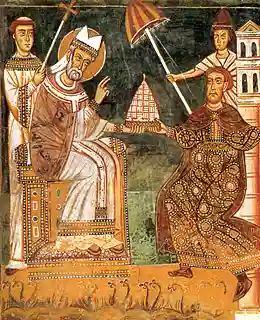
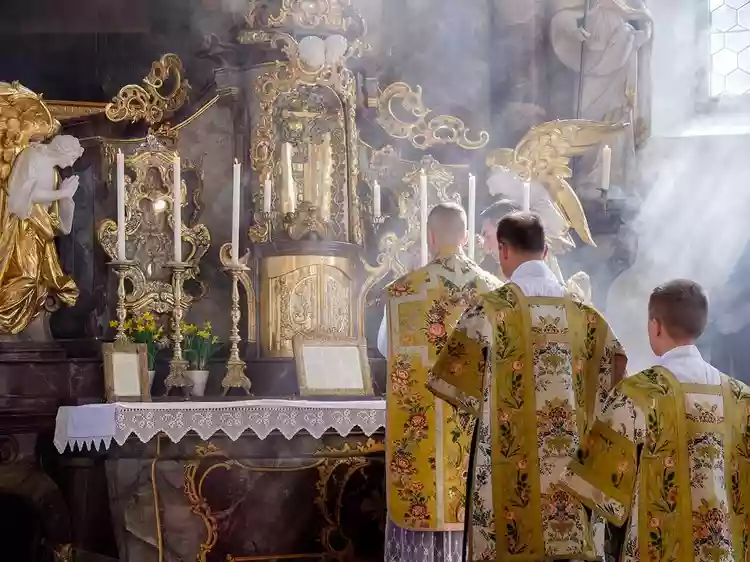

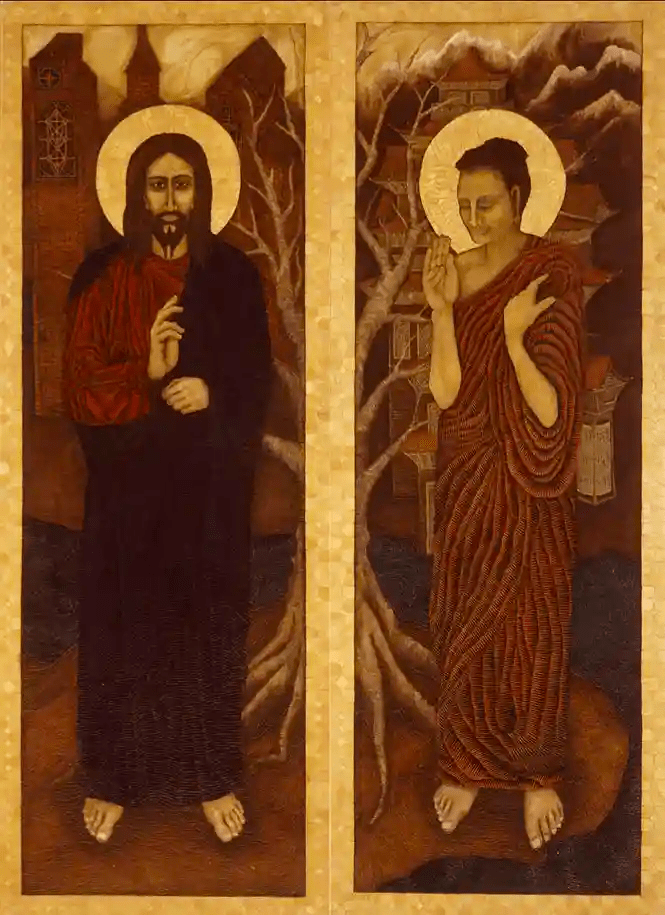
 Nova Polis