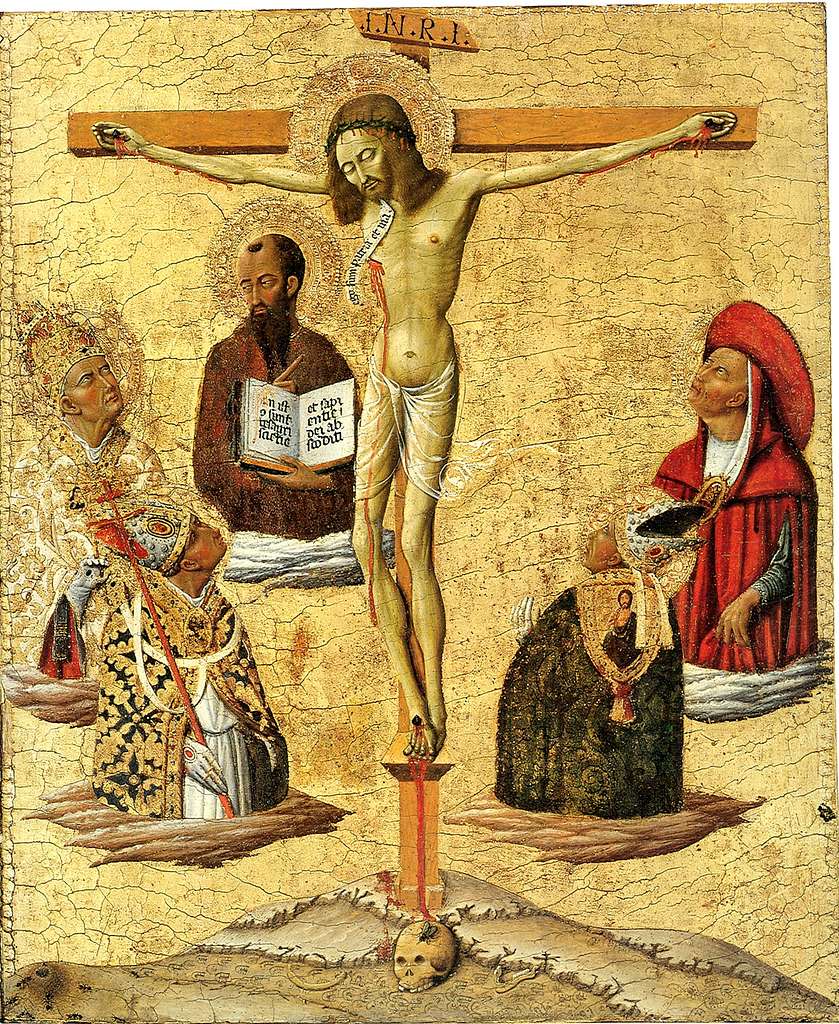
“The mystic differs from the merely pious by his refusal to extract the absolute from the relative. He does not break through the veil; he penetrates it.”
— Evelyn Underhill, “Mysticism: A Study in the Nature and Development of Man’s Spiritual Consciousness”
What lies ahead in my spiritual journey? I have been told by individuals of a certain faction of the Church to simply embrace Orthodoxy or Anglicanism. Those who challenge the Church are often urged to depart by these self-proclaimed pious individuals. Others contemplate abandonment, asserting that the church caters solely to mindless adherents or those ensconced within a cultural bubble, resistant to inquiry.
Moreover, the disconcerting faction perceives mere questions as sins, deeming them more egregious than the institutional corruption afflicting the church. In the labyrinth of theological exploration, I navigate not only the divergent paths of tradition but also the turbulent currents of dissent, seeking a nuanced understanding that transcends facile dichotomies.
Yet, what’s the next step? Orthodoxy, a captivating faith, adorned with rich traditions and diverse cultures. Its churches echo with ancient beauty. However, beneath the surface, dogmatic rigidity persists, sometimes more subtly than in the Church of Rome. While encountering admirable individuals within Orthodoxy, I’ve also encountered fundamentalism, clinging to an unchanging tradition, resisting intellectual exploration. Embracing the Orthodoxy that I been exposed to and which surrounds me, entails relinquishing the intellectual gifts bestowed upon humanity by God – a renunciation of logic and an abandonment of truth revealed through archaeology, history, and linguistics.
It is not to amaze us to hear the name of Fr Seraphim Rose among many Fundamentalist Orthodox Christians, believers who often assert that the earth is merely 6000 years old. In this juxtaposition of rich tradition and entrenched fundamentalism, the allure of Orthodoxy is tempered by the challenges posed to intellectual inquiry, urging a careful contemplation of the path forward in the pursuit of a profound and holistic faith.
So, what’s the alternative? Perhaps the Anglican communion? Despite my deep appreciation for English tradition, I, being non-English, feel no resonance with this foreign tradition. While empathetic towards my Anglican friends, I find myself at odds with certain reformation and progressive views, particularly in the Episcopalian church. Their open communion, welcoming non-Christians, contradicts the mystical principles rooted in early Christian historical records.
What then? I cannot ignore the wisdom of thinkers like Fr. Robert B. Eno, Fr. Francis Dvornik, and Fr. August Bernhard Hasler, whose intellect surpasses mine. The notions of Papal Supremacy and infallibility, not inherent in ancient traditions, resist confirmation through historical and linguistic scrutiny. Choosing truth over dogmatic romanticization, I find myself dwelling in the shadows, navigating a paradoxical reality tied to God and yearning for paradise.
In the recesses of the Church’s life, I tether myself to the umbilical cord of mysticism—a safeguard against the starvation of dogma and a conduit to the profound beauty encapsulated in sacramental rituals. As a humble fool in the eyes of the Divine, my journey persists, not solely as a quest for a final destination but as an ongoing dialogue with the ineffable—a perpetual pursuit of the divine in the ever-unfolding chapters of my spiritual odyssey.
 Nova Polis